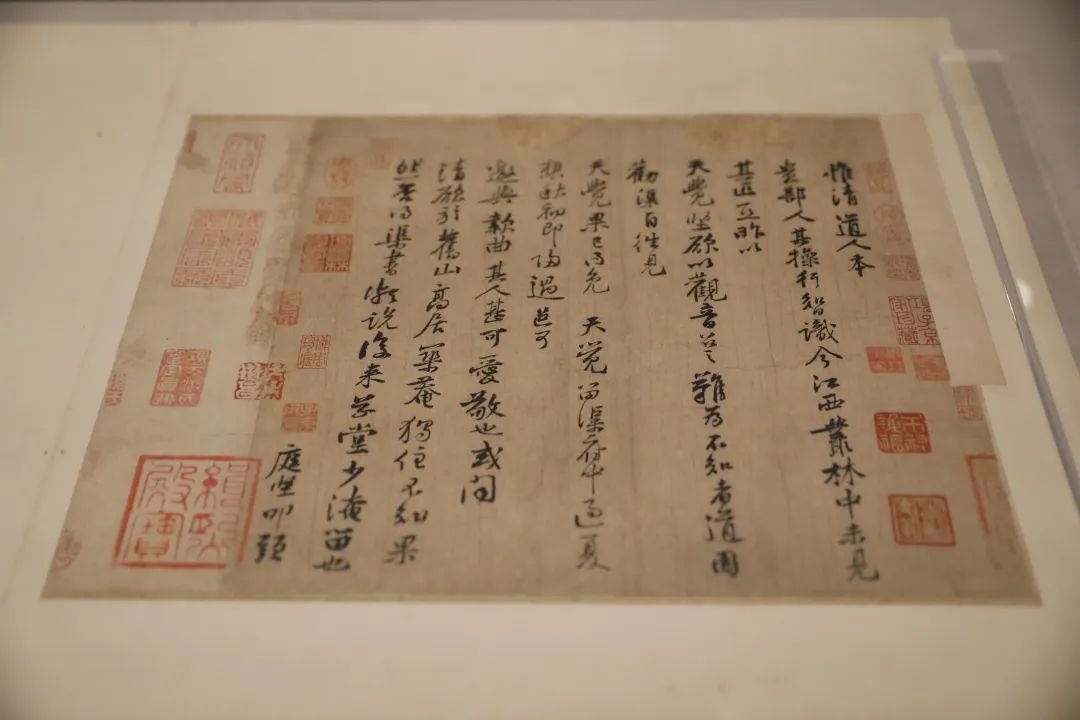
Huang Tingjian
Overview
Huang Tingjian (1045-1105) was a distinguished Chinese calligrapher, poet, and scholar from the Northern Song Dynasty (960-1127). Celebrated for his contributions to the arts, particularly his unique style of calligraphy and profound literary works, Huang was part of a vibrant cultural era in China's history. His works, alongside those of contemporaries like Su Shi and Mi Fu, continue to influence Chinese art and literature.
Early Life and Education
Huang Tingjian was born in the Jiangxi province of China. He was a precocious child, showing a keen interest in literature and the arts from an early age. His family recognized his talent and he received comprehensive education in the classics and arts. His ability to assimilate and apply knowledge was widely acknowledged, setting the stage for his future as a luminary in the literary world.
Calligraphy and Artistic Style
Huang Tingjian is best known for his distinctive calligraphy style, which emphasized boldness, creativity, and expressive power. His contribution to the development of the semi-cursive script has been particularly influential, and his works are considered masterpieces of Chinese calligraphy. Huang's calligraphy was characterized by its fluidity and strength, reflecting his philosophical beliefs in self-expression and individualism. Unlike many of his peers, he favored innovation over rigid adherence to traditional forms, earning both admiration and criticism.
Literary Contributions
As a poet, Huang Tingjian was part of the Jiangxi Poetic School, which prioritized the emotional and intellectual depth of poetry. His writings often reflected personal experiences and philosophical musings, showcasing his ability to intertwine emotion with literary elegance. His poems are celebrated for their rich imagery and reflective tone, offering insight into the societal and cultural dynamics of the Northern Song Dynasty. Huang's close association with Su Shi, another literary giant of his time, further enriched his literary pursuits and output.
Influence and Legacy
Huang Tingjian's influence extended beyond his lifetime, impacting subsequent generations of calligraphers and poets. His emphasis on innovation and self-expression in calligraphy encouraged later artists to explore personal styles and expressions. In literature, his works continue to be studied and revered for their artistic merit and depth of insight. Huang's legacy is preserved not only through his surviving works but also through exhibitions and scholarly studies that continue to explore his contributions to Chinese culture.
Personal Philosophy and Beliefs
Huang Tingjian was known for his philosophical approach to art and life. He believed in the power of art as a form of self-expression and saw calligraphy as a reflection of one's inner character. His works often embodied a sense of spontaneity and freedom, challenging the conventions of his time. This philosophy not only set him apart from his peers but also positioned him as a forward-thinking artist who continues to inspire modern interpretations of Chinese calligraphy and poetry. Article reference1. What's on. chinadaily.com.cn. 20232. Writing shows nation's united character. chinadaily.com.cn. 20233. Home among a thousand sorrows. chinadaily.com.cn. 20214. A mind of the times. chinadaily.com.cn. 2020Photo Gallery(4 pictures)CategoriesArtsTagChinese CalligraphyChinese PoetryChinese Classical LiteratureHistorical FiguresRelatedFour Masters of the Song DynastyCatalogue1. Overview2. Early Life and Education3. Calligraphy and Artistic Style4. Literary Contributions5. Influence and Legacy6. Personal Philosophy and Beliefs- - - []








